The 12 Hallmarks of Ageing No.2: Telomere Attrition
Apr 15, 2026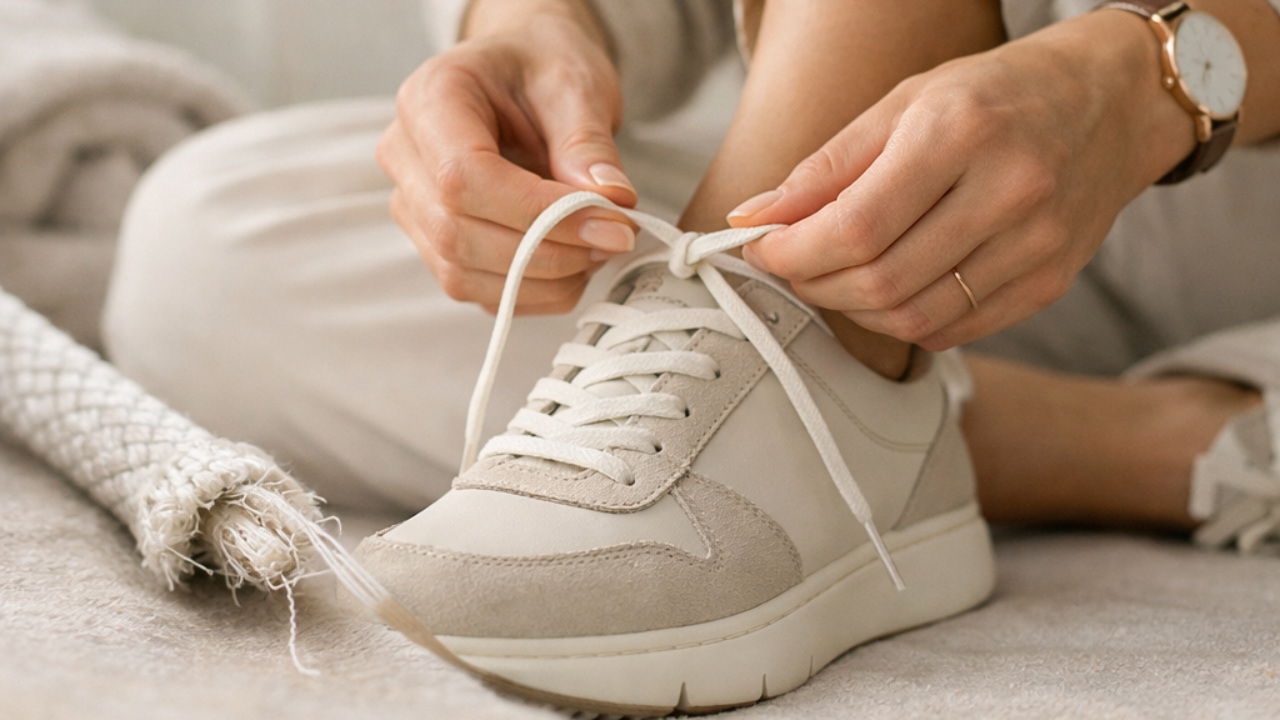
What Shoelaces Have to Do With Biological Ageing
A lot of people think ageing shows up first in the mirror and then in how you move. You know how it goes - you notice a few more lines, a few more grey hairs and perhaps a little less energy. Your body feels stiffer, slower, less responsive than it used to.
But long before we notice those things on the outside, ageing is already happening at a cellular level.
One of the clearest examples of that is something called telomere attrition.
The “shoelace tip” hidden inside your cells
Telomeres are the protective caps at the ends of your chromosomes. Think of them like the plastic tips on shoelaces that stop the lace from fraying. Those little tips even have a name: aglets.
Your telomeres do a similar job for your DNA. They help protect your genetic material as your cells divide and renew.
Over time, telomeres naturally get shorter. That is part of life. But when they become too short, cells are less able to function well, repair properly, or keep tissues healthy. That gradual shortening is called telomere attrition, and it is one of the recognised markers of biological ageing.
So when we talk about ageing well, we are not just talking about wrinkles, stiffness, or how old someone looks from across the room. We are talking about what is happening at the cellular level.
Stress leaves a mark
One of the studies that has stayed with me for years looked at mothers caring for chronically ill children.
These were loving, capable women doing all they could for their families, often while carrying an immense amount of invisible pressure. Researchers found that the women who felt the most stressed had significantly shorter telomeres - the equivalent of around a decade of extra biological ageing.
Think about that for a moment.
That means stress was not just affecting mood or energy. It was showing up in the biology of the body.
I think that is hugely significant, because so many women dismiss stress as normal. They keep pushing through it and keep telling themselves (and everyone else) they are fine.
But “fine” can be a dangerous place to live for too long.
Your biology is always paying attention to the life you are living.
Your cells are listening to your lifestyle
Now for the encouraging part. Research over the years has shown that the things many people brush off as basic - regular exercise, eating well, quality sleep, human connection and stress regulation - are linked with healthier telomeres.
Too often these are treated as lifestyle details we’ll get round to when we have the time when in fact they are part of the daily biological conversation shaping how well we age.
There was a small but powerful lifestyle study in which participants adopted a more whole-person approach: Mediterranean-style eating, regular exercise, stress management and social support. Within three months, telomerase activity had increased. Over five years, telomere length improved compared with the control group.
It suggests that daily choices can help stabilise, and in some cases even improve, the protective structures tied to biological ageing.
Great news - because it means we are not at the mercy of getting older. We are not powerless. And it is not too late.
This is where I part company with wellness as an industry
On one side, you have the tired old narrative that decline is inevitable and ageing is simply a process of managing loss.
On the other hand, you have the shiny biohacking world trying to convince people that staying young requires an ice bath, a lab report, and the GDP of a small country.
Neither is especially helpful. Most people do not need gimmicks because, as I have seen time and again, the body responds to repeated inputs.
How you move, how you eat, how you recover, how you breathe, how stressed you feel, how supported you are. These should be central to how we live - not side issues.
They are the environment your cells live in and that is why I so often come back to simple things done consistently.
Because simple works.
Strength training belongs in this conversation
If you needed another reason to lift weights, here it is.
A 2024 analysis of over 4,800 adults found that regular strength training was linked with longer telomeres, even after adjusting for other lifestyle factors.
Again, this is not about aesthetics. It is about giving your body a reason to stay robust.
Muscle is not just there to make you look toned in a vest top. It influences metabolism, resilience, stability, blood sugar control, bone health and more - including cognitive function.
Just today I have seen research saying that people who cook from scratch reduce their risks of dementia … another reason to prioritise home cooked meals.
Now we can add another compelling reason to the list: it helps support healthier biological ageing too.
The simple habits that protect you
The good news is that the foundations are not rocket science or part of the “dark arts”.
Daily movement like walking, Pilates, strength work - all of it counts.
Strength training two or three times a week.
Mediterranean-style eating: real food which includes plenty of vegetables, food fats, protein, herb, fibre and less of the processed nonsense.
Quality sleep is essential (and not the comatose alcohol induced type).
A calmer nervous system is so important: daily gratitude, journalling, breathwork, time outdoors, proper rest, a meaningful conversation with someone who feels like “home” - these are not indulgences. They actually lower the wear and tear of chronic stress.
And then, of course, there are the obvious things that work against you: smoking, heavy drinking, chronic inactivity, ultra-processed food, and ongoing stress overload.
None of this is revolutionary but once you grasp it, it is powerful.
This is not a fad. It's biology.
This is not vague wellness language wrapped up in a pretty notebook.
The discovery of telomerase - the enzyme that helps maintain telomeres - earned Blackburn, Greider, and Szostak the Nobel Prize in 2009.
So when we talk about movement, sleep, food, stress and connection, we’re not talking about pampering ourselves.
We are talking about the conditions that help the body repair, adapt and hold itself together better over time.
It is serious science. And also, thankfully, deeply practical.
The real point
You do not need to be perfect (most perfectionists never actually get things done!).
You do not need to overhaul your life overnight (it doesn't work anyway).
But you do need to stop underestimating the power of your daily choices (the solution is being consistent)
Because the body is always listening to every walk and strength session you do, every balanced, nutritious meal you eat, every early night and every time you choose calm over chaos.
Every small act of care is sending the right, regenerative signals to your cells.
And over time, those signals shape far more than how you look. They influence how well you function, how well you recover, how much energy you have and how fully you get to live.
And that’s really what it’s all about isn’t it? Not trying to look younger but living and engaging in life fully.
Download Now: 5 Ways to Strengthen Your Bones Naturally
Forget fear-based messaging and outdated advice. This free guide gives you 5 intelligent, science-informed strategies to support strong, healthy bones, without extremes.
We hate SPAM. We will never sell your information, for any reason.
Author